The True Cost of Switching to Plastic-Free Packaging: A Calculator Framework
Sep 18, 2026
Shaoxing, Zhejiang Sep 18, 2026 (Issuewire.com) - A packaging film that outlasts the product it protects is not a packaging solution -- it is a waste problem waiting to happen. That is the observation that drives the global shift toward plastic-free packaging materials. But for procurement teams tasked with executing the transition, the business case is rarely that simple. The unit price of a plastic-free alternative is easy to compare. Everything else -- the process changes, certification timelines, supply chain restructuring, and the revenue risk during ramp-up -- is harder to see and easy to underestimate. This article provides a structured framework for making the financial case properly: five cost categories, a break-even calculator, and a three-phase implementation roadmap that prevents the most common transition failures.
In Short
The true cost of switching to plastic-free packaging is not the per-unit price delta -- it is the sum of five cost categories: direct procurement cost, process and tooling changes, regulatory certification, supply chain transition, and revenue risk during ramp-up. Most teams budget only the first category and underestimate total transition cost by 40-60%. This framework makes all five categories explicit before a procurement decision is made, so the break-even analysis reflects reality rather than a partial view.
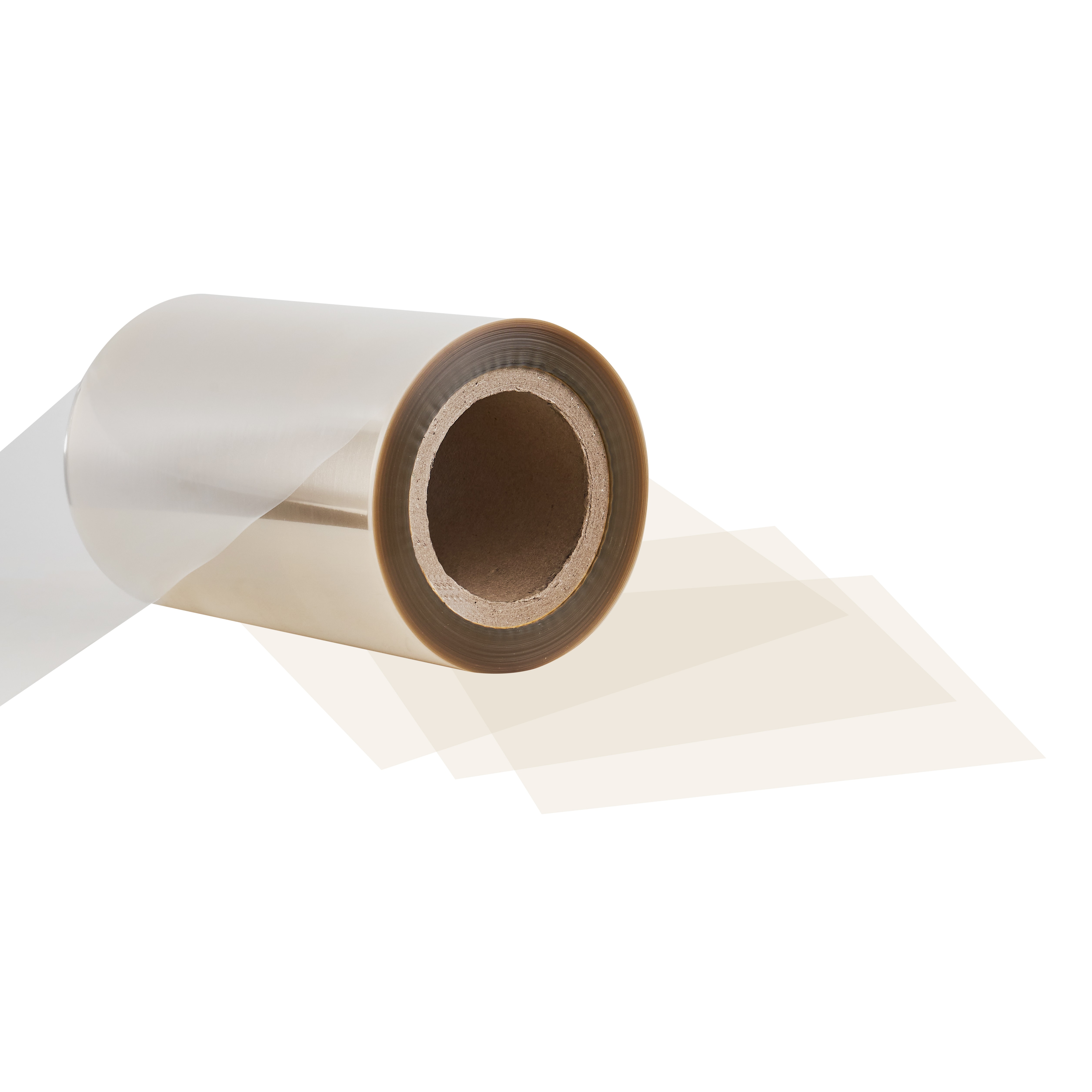
XIADE degradable custom printed cellulose tape -- a plastic-free tape substrate that meets EU food contact material standards. View product specifications
Why the Per-Unit Price Is the Wrong Starting Point
The procurement conversation about plastic-free packaging almost always starts with the same comparison: the current cost per unit of plastic tape or film versus the cost per unit of the cellulose or paper-based alternative. This comparison is real and relevant -- the material price delta is usually the largest visible cost -- but it represents only a fraction of the total transition cost for any but the simplest material substitutions.
The European Environment Agency (EEA) report on packaging waste trends documents that the per-unit cost of plastic alternatives varies by material type and substitution complexity, but the process, certification, and supply chain costs of the transition are consistently underestimated across all material categories. In interviews with procurement teams that have completed plastic-free transitions, the pattern is consistent: teams that planned around only the material price delta encountered cost overruns in months 3-6 of the transition, when process testing, certification documentation, and supply chain overlap costs surfaced simultaneously.
The correct starting point is total cost of ownership (TCO) over the transition and post-transition operating period. This article breaks TCO into five distinct categories, provides a calculator framework for quantifying each one, and presents a three-phase implementation roadmap that staggers the costs to make the break-even timeline legible to procurement decision-makers and finance teams alike.
The Five Cost Categories of a Plastic-Free TransitionCategory 1 -- Direct Procurement Cost Delta
The per-unit price difference between the current plastic material and the plastic-free alternative is the most visible cost. For tape, labels, and secondary packaging films, this delta typically ranges from 10% to 35% depending on the material, the order volume, and the supplier relationship. At high volumes -- above one million units per year -- the delta is often negotiable, and suppliers like XIADE that manufacture cellulose-based materials at scale can offer pricing that narrows the gap significantly.
The key procurement discipline at this stage is to get the per-unit price on an equivalent basis: delivered cost including freight, not just the ex-works unit price. For internationally sourced materials, the delivered cost includes ocean freight, customs duties, and inland transport -- which for cellulose film and paper-based materials can add 5-12% to the landed cost depending on origin, weight, and packaging density.
Category 2 -- Process and Tooling Changes
Switching from a plastic film to a cellulose-based material almost always requires at least one process adjustment. Cellulose films behave differently from polyethylene or polypropylene in several respects: they have a different tensile strength profile, a different moisture sensitivity, a different heat seal range, and a different coefficient of friction on equipment guides and rollers. These differences affect the line speed, temperature settings, and sometimes the tooling geometry of the packaging equipment.
The practical costs at this stage include: seal bar temperature recalibration and testing time (typically one to three days of line downtime per SKU); die or guide modifications if the cellulose film thickness requires a tooling geometry change; and yield loss during the testing and ramp period, when the line is running below design speed while operators develop the new handling routine. For a single-SKU line with a modest speed requirement, this category typically costs from mid three figures to low four figures in direct testing cost plus the opportunity cost of lost production during the testing period.
The ISO 9001 quality management system framework provides a useful structure for managing this phase: the process change should be treated as a controlled change under the quality management system, with defined acceptance criteria, trial run documentation, and a sign-off protocol before full production begins. This documentation also supports the later certification and compliance phases by demonstrating that the material was qualified under controlled conditions.
Category 3 -- Regulatory Certification and Compliance
For any packaging material that will contact food or pharmaceutical products, the regulatory compliance cost is significant and non-negotiable. In the EU, the applicable framework is the EU Packaging and Packaging Waste Regulation (PPWR) combined with EFSA food contact material requirements under the Framework Regulation (EC) No 1935/2004. In the United States, the FDA Food Contact Notification (FCN) process governs new food contact substances. In other markets, the applicable national framework varies but is universally required before the packaged product can be sold.
The certification cost has two components: direct testing and documentation cost, and the time cost of the certification timeline. A full food contact material safety assessment for a new packaging material from a qualified laboratory typically costs in the mid four figures to low five figures, depending on the complexity of the migration testing required. The timeline for a standard assessment is 12 to 18 months for EU food contact compliance; the FDA FCN process has a 120-day review window but the preparation time before submission adds several months. For brand owners planning a market entry, these timelines must be built into the project schedule -- they cannot be compressed without additional cost.
For biodegradable or compostability claims, certification to EN 13432 (the European standard for compostable packaging) or the equivalent US ASTM D6400 standard adds another layer of testing and documentation cost. This cost is separate from and in addition to food contact certification -- a material can be biodegradable and not food-contact compliant, and vice versa.
Category 4 -- Supply Chain Transition Cost
During the transition from plastic to plastic-free, most procurement teams run a dual-sourcing period -- maintaining the plastic material supply for the existing line while qualifying the plastic-free material on a parallel track. This overlap period is necessary for risk management but adds cost: maintaining two suppliers, two material inventories, and two quality specifications simultaneously is more expensive than either state alone.
The specific cost items include: the cost of the existing plastic material inventory that cannot be used after the transition (write-off or sell-off at a discount); the cost of carrying the new material inventory before the transition is complete; the qualification cost for the new supplier (if the plastic-free material comes from a different supplier than the current plastic); and the logistics cost of managing two inbound material streams. For a medium-volume packaging line with 3-6 months of plastic inventory on hand, the inventory write-off and dual-sourcing cost of this category typically ranges from low four figures to mid four figures.
The UNECE guidelines on sustainable procurement provide a useful framework for managing supply chain transitions: the transition plan should include a defined end-date for the legacy material sourcing, a written-down inventory disposal plan, and a supplier performance review that confirms the new material meets specification before the legacy material is phased out entirely.
Category 5 -- Revenue Risk During Ramp-Up
The least quantified but most consequential cost category is the revenue risk during the ramp period. When a line transitions to a new material, the initial production yield is typically lower than the steady-state yield -- operators are learning, the process parameters are being fine-tuned, and the material's behaviour under real production conditions is still being characterised. This yield gap creates two cost impacts: the cost of re-work or scrap on the initial production runs, and the risk of a quality incident if a process drift goes undetected during the ramp period.
For a high-volume packaging line, a 2-3% yield gap during a 4-6 week ramp period can represent a significant financial impact. The mitigation for this cost is a structured qualification protocol -- a defined production run size for qualification testing, a statistical yield target that must be met before full production begins, and a quality hold protocol that prevents release of non-conforming material. This protocol is also the documentation that demonstrates due diligence in the event of a customer complaint or regulatory inquiry during the transition.
The Break-Even Calculator: Framework and Worked Example
The five cost categories above feed into a break-even calculation that determines how long the plastic-free transition takes to generate positive financial returns. The calculator has three inputs and produces one output:
Break-Even Calculator Framework
Step 1 -- Annual cost saving
Annual saving = (Current cost per unit ' Plastic-free cost per unit) -- Annual volume
Step 2 -- One-time transition cost
One-time cost = Process testing cost + Certification cost + Tooling cost + Supply chain transition cost
Step 3 -- Break-even in months
Break-even months = One-time transition cost ÷ (Annual saving ÷ 12)
Worked example -- tape substrate transition, 5 million units per year:
- Current plastic tape cost per unit: 0.008 currency units (illustrative)
- XIADE cellulose tape cost per unit: 0.010 currency units (illustrative)
- Annual volume: 5,000,000 units
- Annual cost delta: (0.010 ' 0.008) -- 5,000,000 = 10,000 currency units per year
- One-time transition costs: process testing 2,000 + certification 8,000 + tooling 1,500 + supply chain 3,500 = 15,000 currency units
- Break-even: 15,000 ÷ (10,000 ÷ 12) = 18 months
In this worked example, the transition breaks even in 18 months -- well within a typical 3-year procurement contract horizon. The sensitivity of this calculation to volume is important: if annual volume drops 20%, the annual saving drops proportionally and the break-even extends to approximately 22 months. If volume grows 20%, the break-even shortens to approximately 15 months.
ForXIADE buyers: XIADE's technical team provides a material qualification support package that includes process testing protocols, food contact documentation templates, and a yield tracking sheet for the ramp period -- reducing the process testing cost and the ramp-period yield risk substantially. Request the qualification support package as part of your procurement RFQ.
Comparing Materials: Cellulose Film vs. Plastic Films vs. Paper
The plastic-free packaging landscape has three main material categories relevant to tape, label, and flexible packaging applications: cellulose-based films, paper-based materials, and biodegradable polymer films. Each has a distinct cost and performance profile that affects both the procurement decision and the transition cost calculation.
Cellulose Film (XIADE) typically costs 10-30% more than standard plastic. It offers good heat sealing with minor temperature adjustments, moderate moisture resistance, and good oxygen barrier performance. Specific grades can meet EU and FDA food-contact requirements, while EN 13432-certified compostable options are available. Process changes are generally low to moderate.
Biodegradable Polymer (PLA/PBAT) costs about 15-35% more than standard plastic and requires specific heat-sealing conditions. It has moderate moisture sensitivity and lower barrier performance, although certified food-contact and compostable grades are available. Switching to PLA/PBAT may require moderate to high process adjustments.
Paper can cost 5-20% less or up to 20% more than standard plastic. It is not naturally heat-sealable and often requires adhesives or coatings. Paper has high moisture sensitivity and limited barrier performance without coating, while coated options can improve moisture protection and support food-contact applications.
Table -- Comparative properties of three plastic-free packaging material categories. Per-unit cost and process change complexity are the two most important variables for transition cost calculation. XIADE cellulose films are available in one-side and two-side coated grades to adjust moisture barrier performance to application requirements.
Three-Phase Implementation Roadmap
A plastic-free packaging transition that is not staged is a transition that will encounter unexpected costs. The following three-phase roadmap is the structure that procurement teams at XIADE customers have found most reliable for managing the financial and operational complexity of the transition.
Phase 1 -- Scoping and Financial Planning (Months 0-2)
In the first phase, define the full scope of the transition: which SKUs, which packaging lines, which markets. Quantify the five cost categories above using supplier-provided pricing and an estimate of the process testing and certification timelines. Build the break-even model for three volume scenarios. Identify the regulatory certification path for each target market. The output of Phase 1 is a procurement budget that reflects all five cost categories and a project schedule that includes the certification timeline as a critical path item.
Phase 2 -- Material Qualification and Process Testing (Months 2-8)
In the second phase, qualify the plastic-free material on the target packaging line under controlled conditions. Run the process testing protocol with defined acceptance criteria for seal strength, line speed, yield, and visual quality. Commission the food contact or regulatory certification testing. Qualify the new supplier. The output of Phase 2 is a qualified material on a qualified line with completed certification documentation -- ready for commercial production but not yet in full commercial volume.
Phase 3 -- Commercial Ramp and Legacy Material Exit (Months 8-14)
In the third phase, begin commercial production with the plastic-free material at the agreed ramp schedule. Track yield and quality metrics against the Phase 2 qualification baseline. Exit the legacy plastic material inventory on the planned schedule. Conduct a post-transition review at the 3-month mark to confirm that the financial model is tracking to the break-even projection. The output of Phase 3 is a stable plastic-free supply with documented quality and financial performance.
The Regulatory Timeline Constraint
One factor that is increasingly compressing the Phase 1-Phase 2 transition window is regulatory urgency. The EU Commission's Packaging and Packaging Waste Regulation (PPWR) establishes mandatory recycled content targets and packaging restriction timelines that are driving brand owners to accelerate plastic reduction commitments. For brand owners that sell in the EU, the PPWR compliance timeline is not a planning variable -- it is a hard constraint that makes the Phase 1 financial planning faster and the Phase 2-3 execution more compressed.
The EU Parliament's PPWR implementation timeline sets intermediate targets for plastic reduction that are tightening annually. For procurement teams that have not started the scoping phase, the risk is not just a higher TCO from delaying -- it is a compliance risk if the brand's public plastic reduction commitment cannot be met because the material qualification was not started early enough. The 12-18 month food contact certification timeline alone is longer than many brand owners' remaining runway to their next public commitment milestone.
The U.S. EPA National Recycling Strategy also provides a framework for procurement teams evaluating plastic-free transitions in the US market, and the U.S. FDA Food Contact Material registration process governs similar compliance requirements for packaging entering the US food supply chain. also provides a framework for procurement teams evaluating plastic-free transitions in the US market, particularly for packaging that falls under extended producer responsibility (EPR) programme requirements in states where EPR legislation has been enacted.
Source :ZHEJIANG XIADE NEW MATERIAL CO.,LTD.
This article was originally published by IssueWire. Read the original article here.
More News








Recommended








YOUR NEWS, OUR NETWORK.
Do you have Great News you want to tell the world?
Be it updates about your business or your community, you can make sure that it’s heard by submitting your story to our network reaching hundreds of news sites across 6 verticals.