Japan’s frozen udon output rises 17.5% as retail production jumps 31%
Nov 23, 2026
Whether cooked at home or ordered with a side of tempura during a lunch break, udon is a familiar staple in Japan. The Japan Frozen Noodle Association reported that the country produced 1.383 billion servings of frozen udon in 2025, up 17.5% from a year earlier and the highest level since 2019. In the restaurant sector, Marugame Seimen also posted record revenue in Japan for the fiscal year ended March 2026.
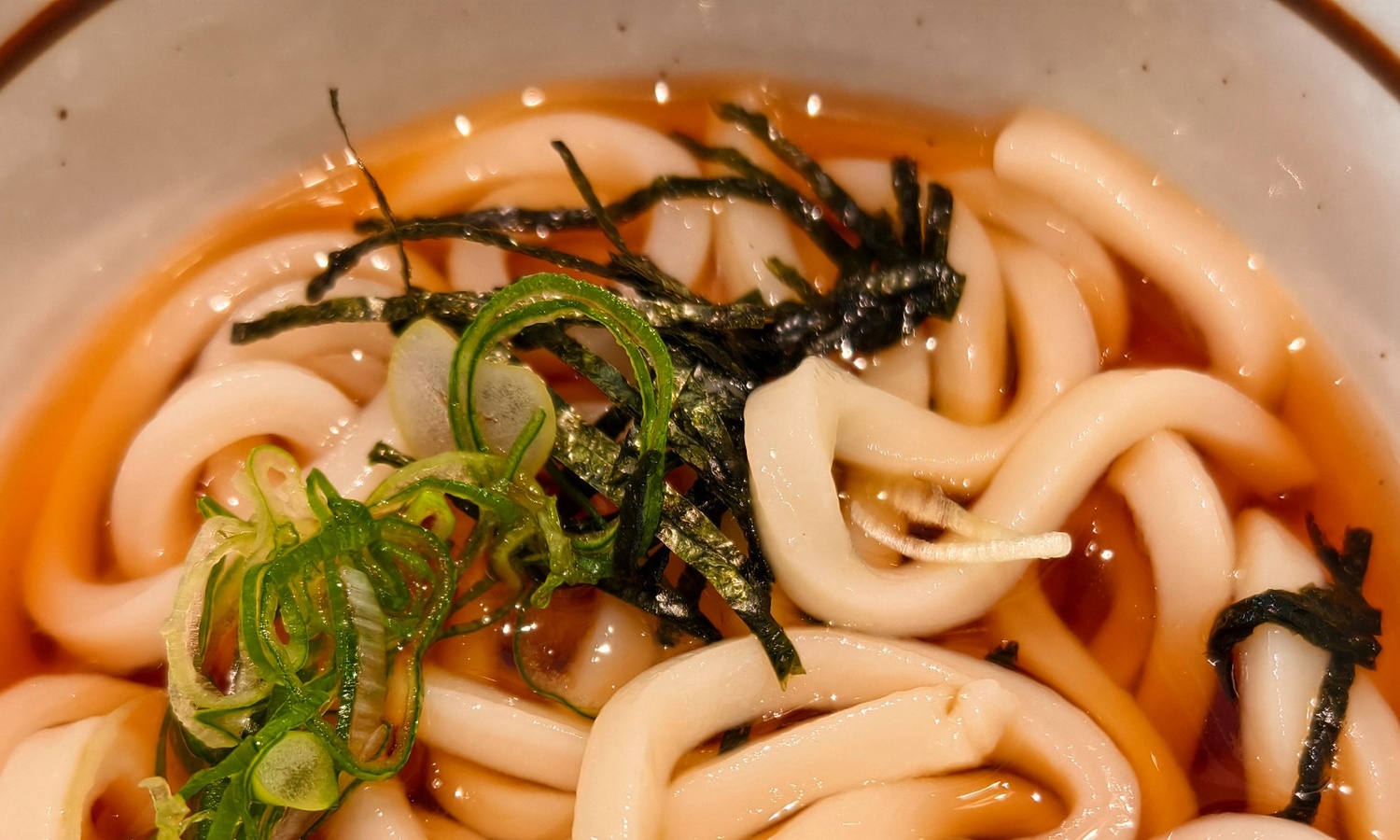
TOKYO, JAPAN (MERXWIRE) – After work, a serving of frozen udon can become dinner with an egg and a sprinkle of chopped scallions. At lunchtime, a bowl of hot udon and a piece of tempura make for a quick meal at Marugame Seimen. Udon can be cooked with whatever is on hand at home or ordered as a simple meal on a busy day. In 2025, Japan’s frozen udon output reached 1.383 billion servings, up 17.5% and the highest since 2019, according to the Japan Frozen Noodle Association. Marugame Seimen’s domestic revenue hit a record in the fiscal year ended March 2026, then set another record for the April–September period.
Japan produced 300 million more servings of frozen noodles, with udon accounting for nearly 70% of the increase
The Japan Frozen Noodle Association’s annual production survey found that Japan produced about 2.354 billion servings of frozen noodles in 2025, up 14.7% from 2.053 billion in 2024 and a record for the third straight year. Udon was the largest category, accounting for 58.8% of total output. Japan produced about 301 million more servings of frozen noodles than it did the previous year. Udon accounted for about 206 million of those servings, or 68.5% of the net increase. In other words, roughly two out of every three additional servings were udon. Frozen udon output was about 3.4 times that of Chinese-style noodles, the second-largest category.
Frozen udon production stood at about 1.25 billion servings in 2020 before falling to 1.091 billion in 2021. It then recovered to about 1.104 billion in 2022, 1.137 billion in 2023 and 1.177 billion in 2024. Annual growth ranged from 1.2% to 3.5% during those three years before accelerating to 17.5% in 2025, when output reached 1.383 billion servings and surpassed its 2020 level for the first time.
Retail production adds 218 million servings as foodservice output falls
Retail products drove the entire net increase in frozen udon production. Output for retail rose 31.0%, from about 704 million servings to 922 million, while output for foodservice fell 2.6%, from about 473 million servings to 461 million. Retail production increased by about 218 million servings, more than the net increase for frozen udon overall, because foodservice output declined by about 12.08 million servings. Retail products went from accounting for about 60% of frozen udon production to roughly two-thirds.
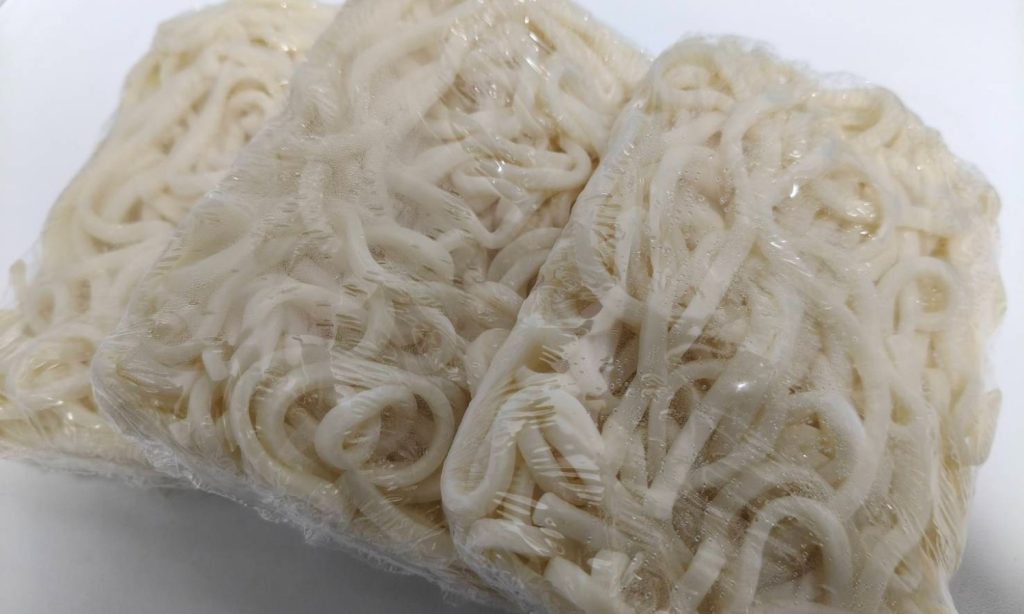
Plain noodles, sold without broth or toppings, accounted for the largest increase. Retail production of plain frozen udon rose from about 593 million servings to 800 million, an increase of about 207 million servings, or 95% of the net gain in retail frozen udon production. Across retail and foodservice combined, plain udon output rose 18.2% to about 1.257 billion servings, accounting for roughly 90% of all frozen udon production.
A serving of plain udon can go into soup or a stir-fry. One of the simplest preparations is kake udon, thick, chewy noodles served in a light Japanese broth. Add a piece of fried tofu and it becomes kitsune udon; top it with an egg whose yolk resembles a full moon and it becomes tsukimi udon. For a richer meal, the noodles can be served in a mildly spicy curry broth or stir-fried with sliced meat and vegetables.
On Japanese social media, some users share a “one container, one meal” approach to prepping frozen udon. They pack the noodles, chopped vegetables, meat and seasonings into a freezer- and microwave-safe container. When it is time to eat, they add water and heat the meal according to the recipe. A little water gives the dish a stir-fried udon flavor, while more turns it into noodle soup. With the ingredients already prepared, dinner does not have to start with washing vegetables or chopping ingredients.
Frozen udon might become a meal for the whole family or a lunch to take to work. Misaki Sato, a homemaker in the city’s Chuo Ward, prepares meals for her family. When she is not sure what to cook, she takes some udon out of the freezer and checks what is in the refrigerator before deciding whether to make soup or stir-fried noodles. “Sometimes I don’t know what to cook, so I take out some frozen udon and use whatever I already have in the fridge,” she said. Vegetables and sliced meat both work, she added, and there is no need to prepare the noodles from scratch.
Kenta Tanaka, an office worker in Osaka’s Kita Ward, often makes frozen udon for lunch at work. He usually packs his own lunch to keep things simple and choose what goes into it. Keeping the noodles in the freezer means he does not have to spend much time preparing lunch before work. “In the morning, I just heat up the noodles and add some vegetables, meat or an egg, and lunch is ready,” he said.
Saving time is one reason consumers turn to frozen foods. In a 2026 survey by the Japan Frozen Food Association, respondents said they used frozen food an average of 1.8 times a week. Some 29.7% used it two or three times a week, while 25.7% did so once a week. Women aged 25 to 34 reported using frozen food 2.2 times a week on average, more often than respondents overall. The survey also found that women reported saving about 20 minutes per meal when using frozen food.
Chinese-style noodles drive growth in foodservice production
Japan produced about 1.341 billion servings of frozen noodles for retail in 2025, up 23.2% and accounting for about 57% of all output. Udon posted the largest increase. Foodservice production rose 5.1% to about 1.014 billion servings, or 43% of the total. Chinese-style noodles were the main contributor to foodservice growth, adding about 47.89 million servings—nearly as much as the net increase across all foodservice noodle categories combined.
Production trends varied by noodle type and intended market. Chinese-style noodles followed the opposite pattern to udon: foodservice output rose 21.7%, while retail production fell 9.3%. Overall output for the category still increased 9.3%.
Like udon, pasta was driven by retail demand: production for retail rose 22.8%, while foodservice output edged up 0.8%. The biggest production gains for pasta, however, came from products packaged with accompaniments or sold as prepared dishes, rather than from plain noodles. Japanese soba production rose in both segments, up 7.7% for foodservice and 3.8% for retail. Yakisoba output fell in both, bringing total production down 4.4%.
Japan’s frozen noodle production by category, 2025
| Noodle category | 2025 production | Year-over-year change | Key trends |
|---|---|---|---|
| Udon | 1.383 billion servings | +17.5% | Retail production rose 31.0%, while foodservice production fell 2.6%. |
| Chinese-style noodles | 403 million servings | +9.3% | Foodservice production rose 21.7%, while retail production fell 9.3%. |
| Pasta | 269 million servings | +15.0% | Retail production rose 22.8%, while foodservice production edged up 0.8%. |
| Japanese soba | 218 million servings | +6.7% | Foodservice production rose 7.7%, and retail production rose 3.8%. |
| Yakisoba (Japanese stir-fried noodles) | 66 million servings | −4.4% | Production fell in both the retail and foodservice segments. |
Marugame Seimen posts record annual revenue as existing stores sell 2% more bowls of udon
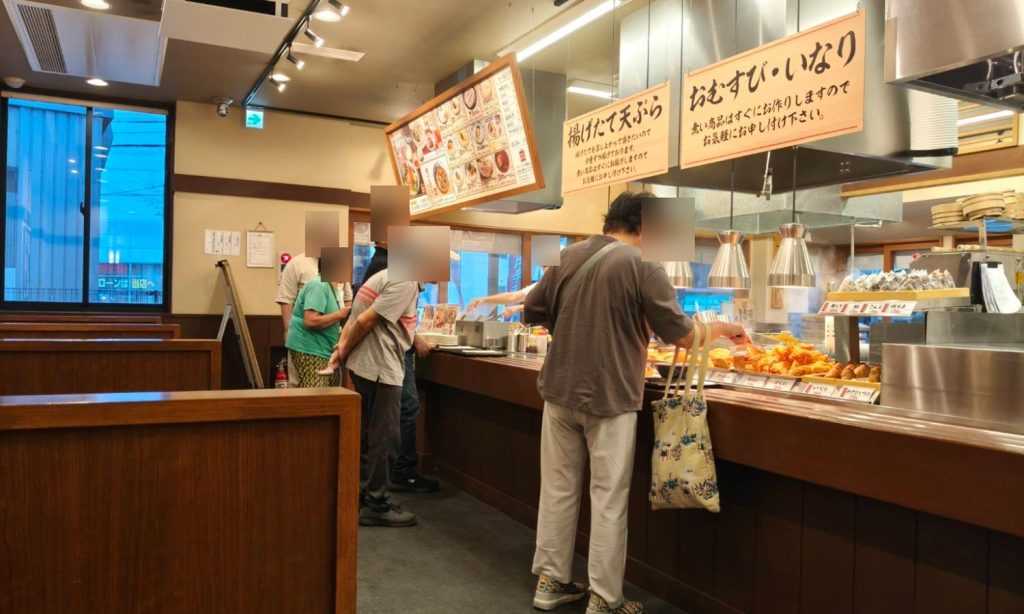
Marugame Seimen also broke a record on the restaurant side. Parent company Toridoll Holdings reported that revenue from Marugame Seimen’s Japanese operations rose 7.1% to ¥137.193 billion in the fiscal year from April 2025 through March 2026, up ¥9.051 billion from ¥128.142 billion a year earlier. At existing stores in Japan, sales rose 4.5%, the number of bowls of udon sold increased 2.0%, and average spending rose 2.5%. The company reports bowls sold under its “customer count” metric. From April through September 2026, Marugame Seimen’s revenue in Japan rose 3.4% to ¥73.768 billion, another record for the six-month period. The chain opened 23 locations and closed three in Japan over those six months, bringing its domestic store count to 907 at the end of September and 910 at the end of October.
More News












Recommended









YOUR NEWS, OUR NETWORK.
Do you have Great News you want to tell the world?
Be it updates about your business or your community, you can make sure that it’s heard by submitting your story to our network reaching hundreds of news sites across 6 verticals.