Dr. John Spencer Ellis Reveals Why Men Over 50 Look Older and Which Common Advice is Myth
Nov 7, 2026
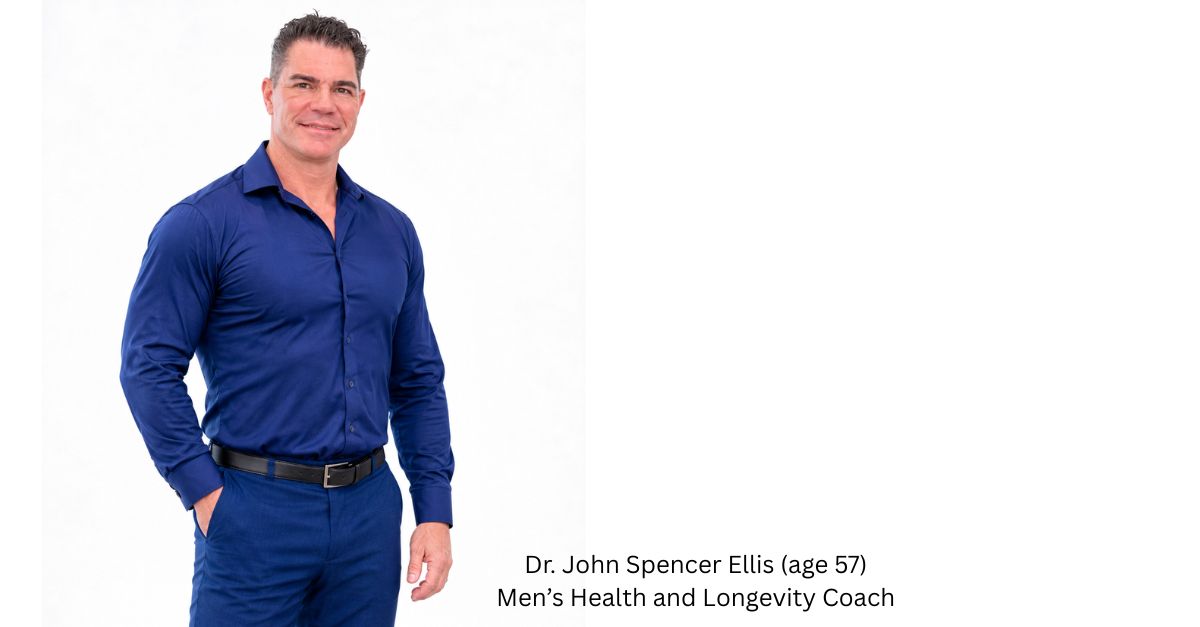
Las Vegas, Nevada Nov 7, 2026 (Issuewire.com) - Dr. John Spencer Ellis, a health, longevity and performance coach with more than three decades in the field, has released a 27-page evidence review examining how declining appearance after 50 affects men's confidence and working life, and how much of it is actually within a man's control. The review draws on 48 primary sources and is available free at https://johnspencerellis.com/why-you-look-older-after-50-and-what-the-research-says-actually-matters/.
The problem men describe, and rarely say out loud
Men seldom open a conversation by saying they are unhappy with their face. What they report instead is a change in how a room responds to them. A younger colleague being listened to in the way they used to be. Working as hard as ever and getting less back. Catching a reflection in a shop window and not recognizing the man.
The appearance part surfaces later and sideways -- a photograph someone else posted, a remark from an adult child, the realization that a suit that used to work no longer does.
"Men will discuss almost anything before they discuss this," said Dr. Ellis, who is 57. "And when they finally do, the advice waiting for them is either that it's vanity and they should get over it, or that it's a crisis and here's what to buy. Both responses are ways of not engaging with it."
What the research actually found
The review's central finding reframes the problem. In a controlled experiment with 383 adults and 264 professional recruiters, candidates were presented with the age on their résumé and the apparent age of their face varied independently.
Stating that a candidate was 50 rather than 30 had no effect on hireability whatsoever -- a result of p=0.965. Digitally aging the candidate's face did reduce hireability, but not through attractiveness, which had been matched across the photographs. The entire effect ran through assumed physical fitness.
Critically, when raters were simply told the candidate was physically fit, the penalty for looking older disappeared.
A second finding cuts against the premise of most men's anti-aging marketing. Pooled across 331 longitudinal samples and more than 160,000 people, men's self-esteem does not collapse in midlife -- it peaks between 60 and 70.
"That's the fact I most want men to hear," said Dr. Ellis. "If your confidence is falling at 55, you are moving against the trend. That makes it a problem with a cause, not a stage of life you have to accept."
How much is genetics, and how much is habit
In 387 Danish twin pairs -- 176 of them male -- heritability of perceived facial age was 58%, with a confidence interval of 48 to 65%. Roughly 40% is not explained by genes.
In 318 Dutch men aged 45 to 75, a short list of modifiable factors accounted for 9.3 years of higher perceived facial age: smoking, sun exposure, sunbed use, skin that reddens in sun, and two dental factors.
The review's most hopeful finding concerns reversal. In 1,602 men, current smokers carried 15.5% more facial wrinkling, while former smokers showed no residual excess at all.
Why men need guidance to act on this
The review argues that the information is not the barrier. Most of what works is free, simple and widely known -- and almost never sustained.
Three reasons recur. Men consistently misallocate their effort: eye-tracking research shows the jawline and forehead are the least-fixated of nine facial regions, yet they absorb most of the attention and spending. Men cannot audit themselves reliably, because self-rated attractiveness diverges measurably from how others actually rate them. And the sequence matters enormously -- procedures perform better, and are needed less, on a man who has already addressed the free items, yet most men arrive wanting the procedure first.
"There's a specific failure mode I see constantly," said Dr. Ellis. "A man spends two thousand dollars on his hairline because he read that balding ages you eight years. That figure came from a hair clinic's own survey. The two best studies ever done -- 739 male twins and separately 1,602 men -- found baldness statistically non-significant for perceived age. Meanwhile the things that genuinely move the number are sitting there costing nothing."
About the report
The review covers the measurable changes behind facial aging, heredity versus habit, what observers actually notice when judging a man's age, what the twin data reveal about perceived age and survival, and which treatments survive scrutiny once trial funding is accounted for. Sources, sample sizes, confidence intervals and industry funding are disclosed throughout, and several findings contradict services within Dr. Ellis' own field.
The report is free and requires no purchase.
Read the full article and request the special report:
Source :Dr. John Spencer Ellis
This article was originally published by IssueWire. Read the original article here.
More News








Recommended







YOUR NEWS, OUR NETWORK.
Do you have Great News you want to tell the world?
Be it updates about your business or your community, you can make sure that it’s heard by submitting your story to our network reaching hundreds of news sites across 6 verticals.